
Bhogi, Sankranti & Kanuma: Meaning and Traditions
Updated 12 November 2026 · Sankranti Celebrations
A season of gratitude
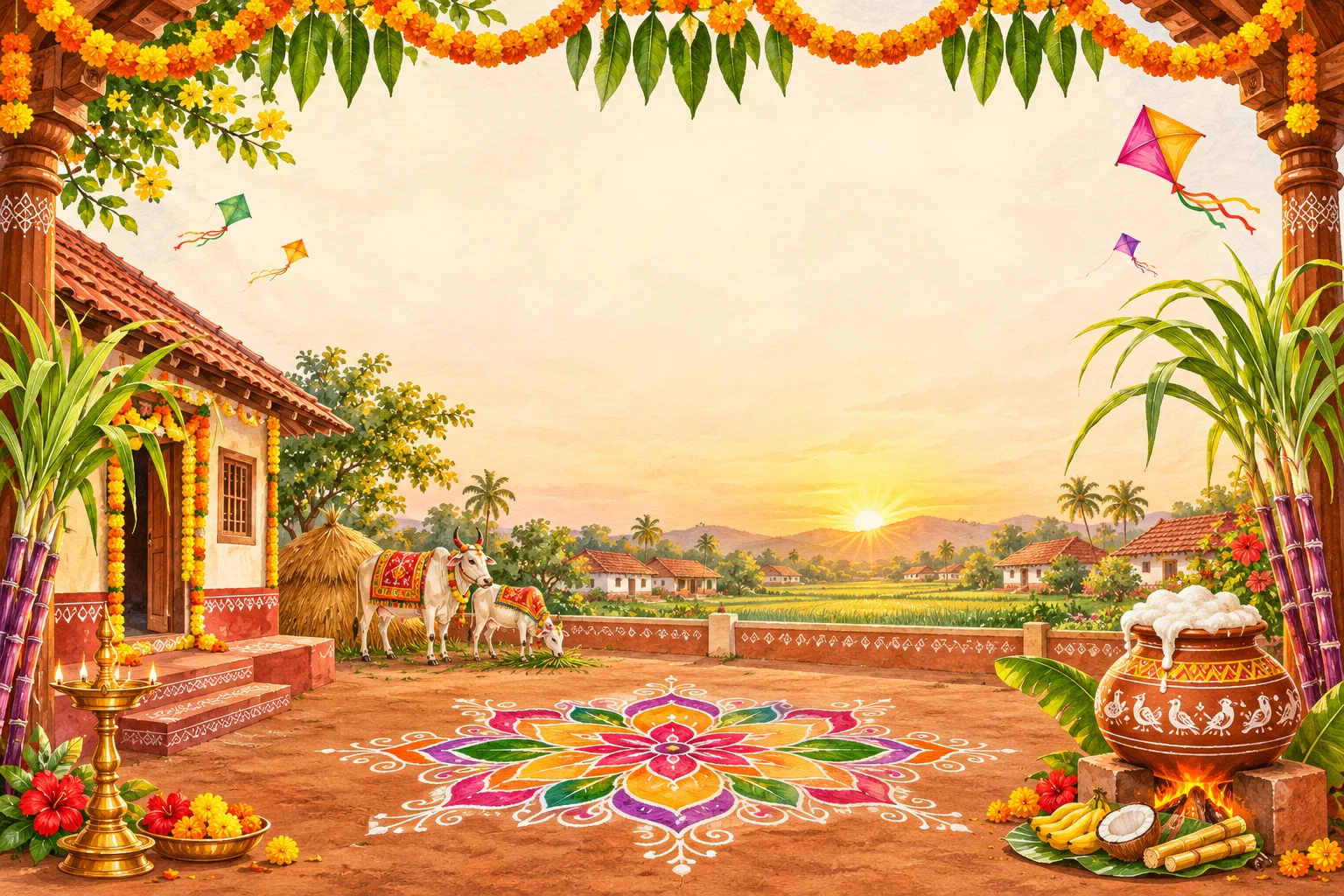
Sankranti brings the harvest into the home. Courtyards are swept, familiar dishes return to the kitchen, and families make room for visitors. In Telugu communities, the celebration often unfolds through Bhogi, Sankranti and Kanuma. Each day has a different emphasis, but gratitude connects them.
Bhogi: a fresh beginning
Bhogi is associated with renewal. Families clean and decorate their homes, and some communities gather around a traditional morning fire. Practices differ, so follow local guidance and avoid burning plastics or harmful materials. A fresh muggu at the entrance is a simple way to welcome the day.
Sankranti: sharing the harvest
The main festival day is a time for festive cooking, family visits and giving. Rice, jaggery and seasonal produce feature in many households. Colourful kites brighten some celebrations, while others centre on prayers, food and quiet time together.
Kanuma: honouring farm life
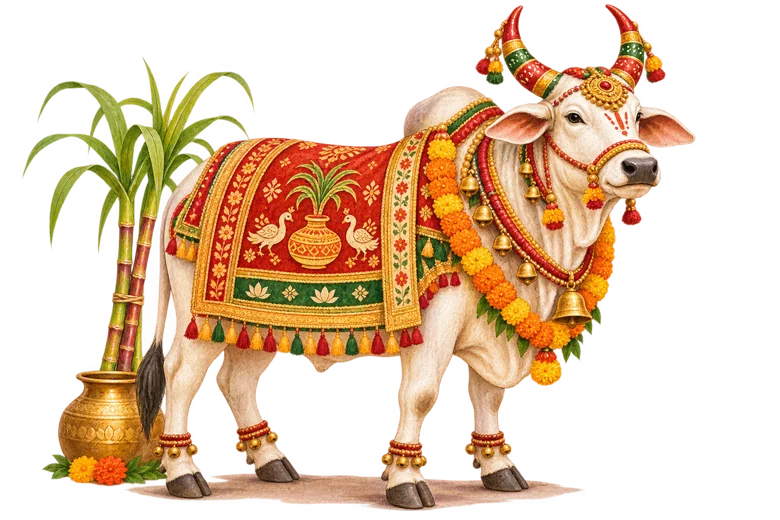
Kanuma recognises the role of cattle and agriculture in everyday life. In farming communities, animals may be washed and decorated with care. The day is also a reminder that a harvest depends on many kinds of work, both seen and unseen.
Make the celebration your own
Ask elders about your family’s traditions, invite younger relatives to help with a simple muggu, and share food with neighbours. A thoughtful celebration does not need to be elaborate. The time spent together is what makes it memorable.